AI & business technology
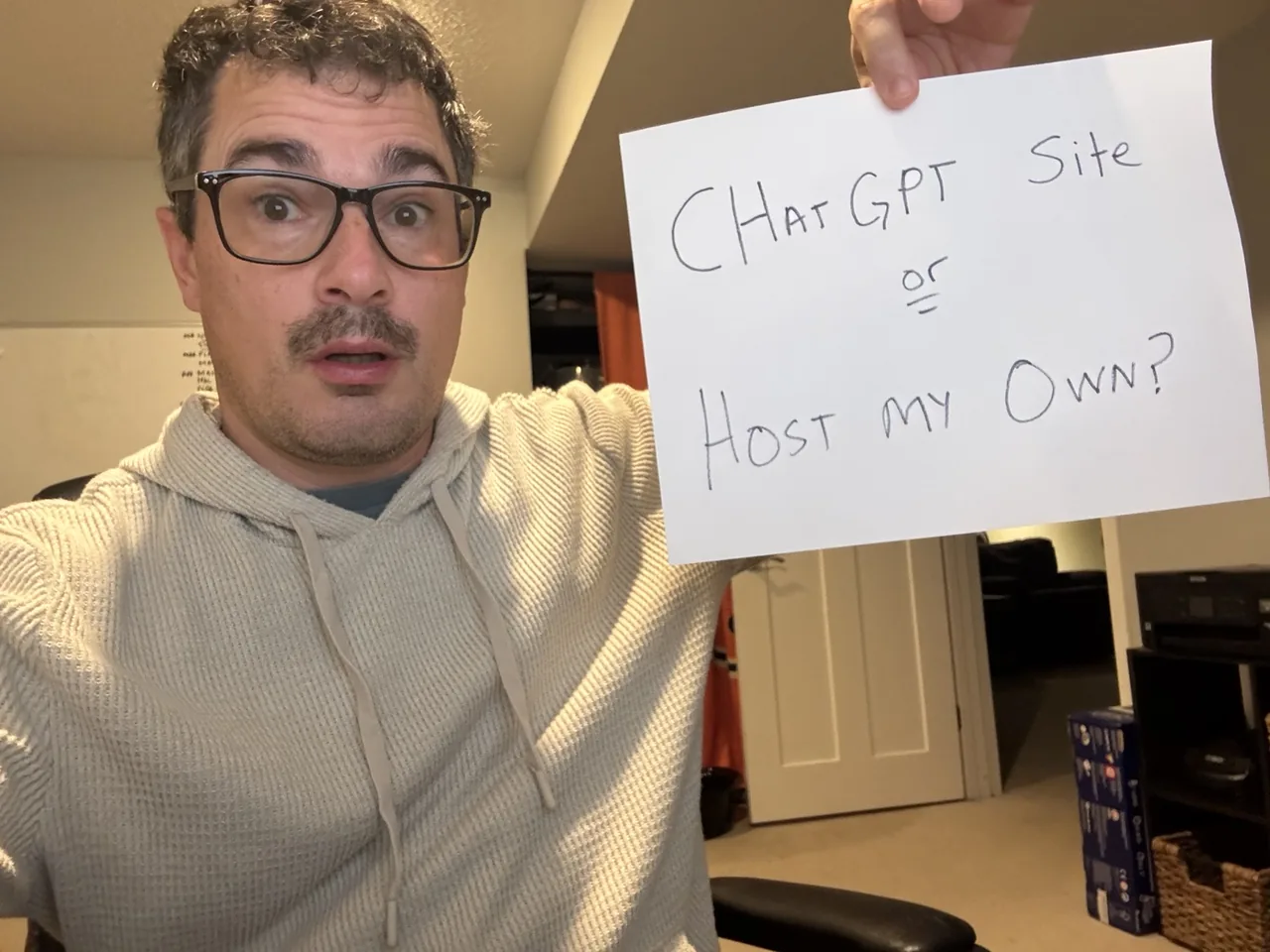
Should I Build a ChatGPT Site or Host My Own?
AI can build a business website, internal dashboard, or customer portal without you starting with a traditional development environment. But building with AI and hosting with AI are two separate decisions.
ChatGPT Sites offers a managed starting point. GitHub and Cloudflare give your business more direct control over its application and infrastructure.
When should you use ChatGPT Sites?
Start here for a prototype, a simple internal tool, a calculator, or a dashboard you want to refine through conversation. You can preview and publish without first setting up a separate hosting account.
OpenAI documents D1 relational storage (up to 10 GB per site) and R2 file storage. That makes Sites relevant for applications that need persistent records, not just marketing pages.
When should you host your own application?
For customer portals, complex integrations, sensitive data, or applications that require dependable background processing, independently managed hosting deserves consideration from day one. GitHub stores your code; Cloudflare Workers runs your application, with D1 for structured records and R2 for files.
You can still use ChatGPT to write code, review changes, and assist with deployments. Hosting independently does not mean giving up AI development.
Can I explore the D1 database directly?
This is a major distinction for businesses that care about reporting. With a D1 database in your own Cloudflare account, authorized staff can open the Cloudflare dashboard, select their D1 database, and run SQL in its console. The Wrangler CLI also supports querying and exporting databases.
For example, a service business could find how many projects are in each status without building a new report first:
SELECT status, COUNT(*) AS projects
FROM projects
GROUP BY status
ORDER BY projects DESC;
This example assumes a projects table with a status column. Direct SQL access makes investigating missing records, reconciling imports, and validating reports much easier.
ChatGPT Sites uses D1 technology, but that does not mean its database appears in your own Cloudflare dashboard. The public documentation does not establish independent Cloudflare console or Wrangler access to a Sites-managed database. Ask ChatGPT to build an authorized read-only data explorer, predefined queries, and CSV or SQL exports if needed; test these before relying on them. Never expose an unrestricted SQL endpoint publicly.
Moving from ChatGPT Sites to GitHub and Cloudflare
The underlying storage technologies are a natural fit, but migration is not a one-click transfer. Plan to recreate the hosting configuration and verify runtime compatibility.
| ChatGPT Sites (initial MVP) | GitHub + Cloudflare (future hosting) |
|---|---|
| Application source code | GitHub repository |
| Backend API | Cloudflare Workers |
| Sites D1 database | Business-owned D1 database |
| Sites R2 storage | Business-owned R2 storage |
| Scheduled jobs | Cron Triggers |
| Environment secrets | Worker secrets |
| Custom domain | Cloudflare hosting |
OpenAI documents source-code export through Codex, but not a bundled backup-and-restore workflow for records and files. A code rollback also does not roll back database changes.
Keep versioned SQL migrations, write and test data and file exports, and rebuild integrations against their source systems where practical. Reconfigure secrets securely, test customer permissions, compare record counts and file integrity, then switch DNS once the replacement is ready. Authentication may require users to sign in again.
What does hosting cost?
As of November 18, 2026, OpenAI says Sites hosting is free through December 31, 2026, with proposed usage rates beginning in January 2027. Development consumes Codex usage separately. Check current plan allowances and pricing before committing.
Cloudflare has its own free and paid usage tiers; actual cost depends on requests, database operations, storage and other services. Compare operating costs alongside development time and the cost of a future migration, not just the subscription price.
My recommendation: build for portability
Start with the simplest platform that meets your requirements. If you choose Sites, make a tested exit plan part of the first version; if independent SQL access, automation or recovery is essential, consider owning the infrastructure immediately.
Keep accounts under your business's control, maintain a data dictionary, verify access permissions, and test restoring exports. For integrations, design reconciliation to handle inserts, updates, deletes and removed relationships; never delete records based on a partial import.
The goal is not just to build quickly with AI. It is to own a system your business can understand, maintain and move when necessary.
Further reading
ChatGPT Sites documentation and pricing · Sites management and export limitations · Cloudflare D1 import and export · D1 query and management commands
Need help choosing an architecture or making your business data easier to explore? See Data Reporting and Analytics or book a free consultation.